- Introduction
- 1. Understanding Typhoons in Japan 🌧️
- 2. How to Prepare Before a Typhoon 🧳
- 3. What to Do During a Typhoon ⚠️
- 4. Transportation Disruptions 🚆
- 5. Follow Official Advice 📱
- 6. If You Need to Evacuate 🏃
- 7. After the Typhoon Passes 🌈
- Essential Emergency Items 🎒
- Frequently Asked Questions
- Final Thoughts ❤️
Introduction
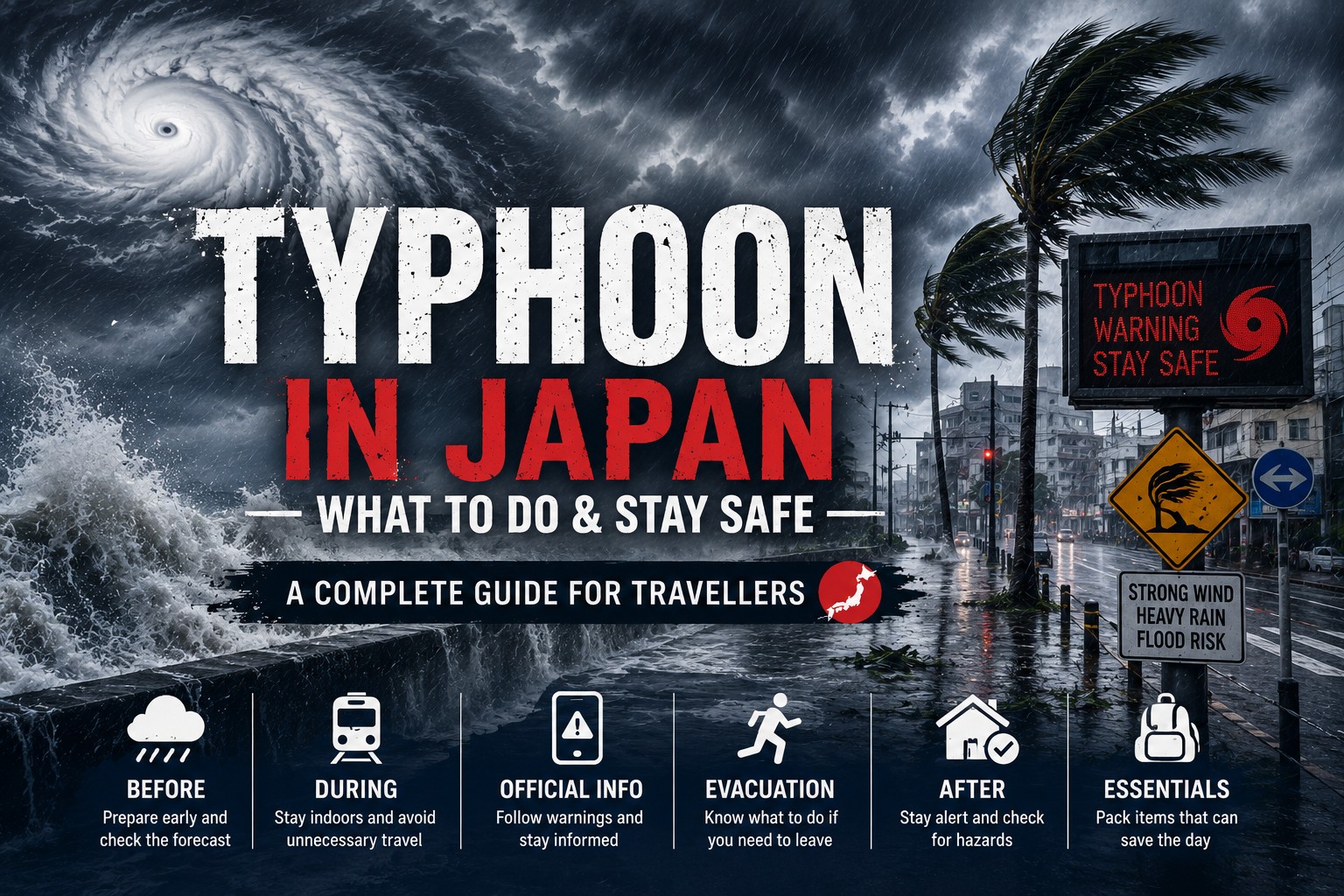
Japan is a beautiful country to explore, but travellers should be aware that typhoons can occur during certain times of the year. 🌪️
A typhoon can bring heavy rain, powerful winds, flooding, landslides, and transport disruptions. For visitors, this may feel unfamiliar or worrying, especially when travelling with family, children, or valuable luggage.
The good news is that Japan has strong weather forecasting systems, clear emergency procedures, and well-prepared hotels and transport operators.
This guide explains what to do before, during, and after a typhoon so you can stay safe and make calm decisions while travelling.
1. Understanding Typhoons in Japan 🌧️
A typhoon is a powerful tropical storm that forms over the northwestern Pacific Ocean. It is similar to a hurricane or cyclone, but the name “typhoon” is used in this region.
Japan’s typhoon season usually peaks from August to October. However, strong storms can occasionally occur outside this period.
Even if a typhoon does not directly hit your destination, it may still cause:
- Heavy rain
- Strong winds
- Flooding
- Landslides
- Train suspensions
- Flight delays or cancellations
Checking the latest forecast is essential, especially if you are planning to move between cities.
2. How to Prepare Before a Typhoon 🧳
Good preparation can make a stressful situation much easier to manage.
Before the typhoon arrives, check reliable weather updates several times a day. Useful sources include the Japan Meteorological Agency, local news, weather apps, hotel staff, and official transport company websites.
You should pay attention to:
- The predicted typhoon path
- Heavy rain warnings
- Flood warnings
- Landslide warnings
- Evacuation information
- Train and flight announcements
It is also wise to fully charge your phone, portable charger, camera batteries, and any devices your family may need. 🔋
If severe weather is expected, buy simple food and drinks in advance. Convenience stores may become crowded or temporarily run out of essentials.
Useful items include:
- Bottled water
- Snacks
- Instant meals
- Baby food or child supplies
- Basic medicine
- Wet wipes
- A small flashlight
Although Japan is increasingly cashless, carrying some Japanese yen is helpful in case card payment systems are temporarily unavailable. 💴
3. What to Do During a Typhoon ⚠️
During a typhoon, the safest option is usually to stay inside your hotel or accommodation.
Avoid sightseeing, walking near rivers, going to beaches, hiking, cycling, or driving unless absolutely necessary. Strong winds can blow objects into the air, and flying debris is one of the main dangers during severe storms.
Umbrellas are often unsafe in strong wind. A rain jacket is usually a better choice if you must move a short distance.
Hotel buildings in Japan are generally designed to handle severe weather, and hotel staff are often used to guiding guests during typhoons. If you are unsure what to do, ask the front desk for advice.
For long-haul travellers arriving on a stormy day, a calm recovery plan can help. Consider staying at the hotel, using room service if available, and avoiding unnecessary transfers until conditions improve. 🏨
4. Transportation Disruptions 🚆
Typhoons often affect transport across Japan.
Possible disruptions include:
- Shinkansen cancellations
- Local train suspensions
- Flight delays
- Flight cancellations
- Ferry cancellations
- Highway closures
- Airport transfer delays
Before travelling, always check official transport updates. Do not rely only on general map apps, as they may not immediately reflect weather-related cancellations.
If you have a flexible schedule, it is usually safer to delay travel until the storm has passed.
For families or travellers with large luggage, private transfers may be more comfortable once roads are confirmed safe. However, do not travel during the strongest part of the storm unless advised by local authorities or hotel staff.
5. Follow Official Advice 📱
Japan uses several warning systems during severe weather. You may receive emergency alerts on your smartphone, especially if you have a local SIM card or roaming connection.
Important warning terms include:
- Heavy Rain Warning
- Flood Warning
- Storm Warning
- Landslide Warning
- Evacuation Information
- Emergency Warning
If you do not understand an alert, ask hotel staff, station staff, or local authorities for help.
Never ignore evacuation information. Even if the weather outside does not look dangerous yet, flooding and landslides can happen quickly.
6. If You Need to Evacuate 🏃
In some areas, especially near rivers, mountains, or coastal zones, evacuation may be recommended.
If local authorities advise evacuation, stay calm and follow instructions.
Bring only essential items, such as:
- Passport
- Wallet
- Phone
- Portable charger
- Medicine
- Important documents
- Water
- A light jacket
Follow designated evacuation routes and avoid flooded roads. Do not attempt to cross moving water, even if it looks shallow.
If you are staying in a hotel, the staff can usually explain where to go and whether evacuation is necessary.
7. After the Typhoon Passes 🌈
Even after the rain stops, danger may remain.
Avoid:
- Flooded roads
- Damaged buildings
- Fallen trees
- Rivers with strong currents
- Coastal areas
- Fallen power lines
Transport may take several hours or longer to return to normal. Flights, trains, buses, and ferries can remain delayed even after the weather improves.
Before continuing your journey, check the latest transport information and allow extra time. A slower schedule is often the safest and least stressful choice after a typhoon.
Essential Emergency Items 🎒
A small emergency kit is useful for any trip in Japan, especially during typhoon season.
Recommended items include:
- Passport
- Cash
- Phone
- Portable charger
- Flashlight
- Bottled water
- Medicine
- Rain jacket
- Travel insurance details
- Hotel address in Japanese
These items do not need to take up much space, but they can make a major difference during unexpected weather.
Frequently Asked Questions
Should I cancel my trip if a typhoon is forecast?
Not always. Many typhoons affect only certain regions for a limited time. Check official forecasts, airline updates, hotel policies, and transport announcements before making a decision.
Are hotels safe during a typhoon?
In most cases, yes. Hotels in Japan are generally well built and staff are familiar with severe weather procedures. Staying indoors is usually much safer than going outside.
Can I go outside after the rain stops?
Not immediately. Strong winds, flooding, landslides, and transport disruption may continue after the rain has eased. Always check official updates first.
What should families with children do?
Families should prepare snacks, water, medicine, nappies, entertainment, and chargers in advance. Staying in one place until the storm passes is usually safer and less stressful. 👨👩👧
Final Thoughts ❤️
A typhoon can feel intimidating, especially when you are far from home. But with calm preparation, reliable information, and flexible travel plans, you can stay safe in Japan.
Check the forecast, follow official advice, avoid risky areas, and give yourself extra time before moving again.
A well-prepared traveller can turn uncertainty into confidence—and continue discovering Japan with peace of mind.
コメント